
Deep-set stains can sink quietly into the fibres of your carpets until they seem almost permanent, and they can dull the whole room.
With the right approach, you can lift stubborn marks, revive flattened piles, and bring back the feeling of soft, clean warmth underfoot.
This guide leads you through clear steps so you can deal with difficult stains calmly and confidently instead of replacing a tired-looking rug.
Understand Your Carpet And Stain
Effective stain removal starts with knowing what you are dealing with. A fresh coffee splash behaves differently from dried ink and each responds to products in its own way.
Wool, synthetic blends, and delicate natural fibres absorb liquid differently, which affects how quickly a mark can become fixed in place, especially in thick winter rugs that feel cosy underfoot.
Take a moment to study the area in natural light and think about whether the stain came from food, drinks, mud, makeup, or a pet accident.
The age of the carpet is also important because older strands can fray if scrubbed too hard, whereas newer rugs may have a protective finish.
This quick assessment guides every step that follows and prevents damage before any cleaner touches the pile.
Prepare The Right Tools Before You Begin
Once you understand the stain, you can gather what you need instead of reaching for the nearest bottle in a rush.
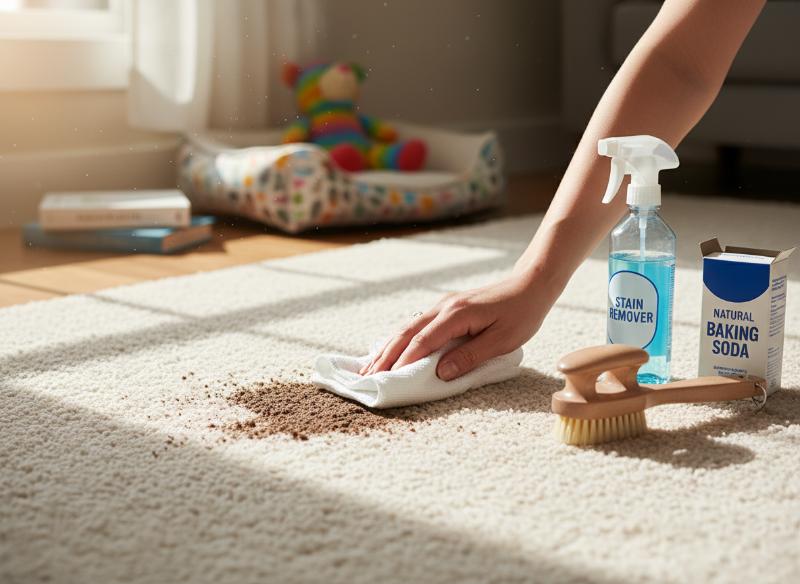
A small kit with white cloths or kitchen roll, a soft-bristled brush and a simple spray bottle lets you respond calmly when a glass tip or muddy shoes cross the room on a wet afternoon.
Knowing that everything is ready brings a sense of order when the carpet looks anything but tidy.
If the original label is still attached, take a moment to read any fibre descriptions or cleaning symbols. This guides your choice between gentle home mixtures and specialist products for wool or synthetic pile.
By matching tools and products to the carpet, you lower the chance of faded colour, roughened texture or a backing that feels stiff once everything has dried.
Blot Spills Gently To Contain The Damage
When a dark patch appears on a pale rug, the urge to scrub is strong, yet scrubbing usually pushes pigment deeper into the pile and widens the mark.
A slower approach provides you far better control and keeps the stain from travelling. The aim is to lift moisture upward rather than driving it sideways into clean fibres while the carpet slowly dries in the soft afternoon light.
Place a clean cloth over the damp area and press down with steady, light pressure. Begin at the outer edge and move towards the centre so that you always work inwards.
As each section of cloth becomes wet, switch to a dry area or a fresh cloth so that you keep drawing liquid away. This simple habit may feel repetitive yet it lays the groundwork for every treatment that comes next.
Use Simple Home Remedies For Stubborn Marks
Strong bottled products are not the only answer to deep-set stains because simple cupboard ingredients can be surprisingly effective.
A mixture of equal parts cool water and white vinegar can loosen many food and drink marks while also softening lingering odours. Pour the mixture into a spray bottle, mist the area lightly and then blot in the same careful pattern that you used when the spill was fresh.
For stale smells or slightly greasy patches, baking soda can make a clear difference.
Sprinkle a thin layer over the dry or lightly dampened area and leave it for a while so that it can absorb moisture and odours before you brush it away and hoover.
Many certified carpet cleaners highlight these ingredients as gentle, affordable helpers that care for most weaves while keeping day-to-day costs under control.
Apply And Work In Commercial Cleaners With Care
Certain stains, especially those with dark dyes, heavy grease, or marks left for weeks, require more than simple home remedies.
In those moments a shop-bought cleaner designed for your type of carpet is the safer choice. Choosing a mild product without harsh fumes makes the room comfortable for children, pets and anyone relaxing nearby in the evening.
Test a small hidden patch first and wait until it dries. If the fibres maintain their colour and texture, you can move on to the stains with greater confidence.
Apply a modest amount of cleaner directly or from a spray bottle so that the surface is only lightly damp.
Give the product a short time to work, then take a soft brush and move in small circles from the edge towards the centre so that loosened particles rise instead of spreading further.
Rinse, Dry And Protect Your Carpet For The Future
After the stain has faded, you still need to remove leftover product so that it does not attract fresh dirt.
Lightly rinse the area with clean, cool water using a damp cloth rather than pouring water straight onto the floor. Press with a fresh, dry cloth several times until there is only a faint feeling of dampness when you touch the fibres.
Good drying is as important as good washing. If the weather is mild, you can open a window so that fresh air moves slowly through the room or place a fan where air flows gently across the carpet.
Once the area is dry, regular hoovering removes grit that might otherwise cut into the pile and bind with future spills.
You might also use a fabric protector spray according to the instructions so that liquids sit briefly on the surface, giving you extra moments to blot them away before they sink in.
Conclusion
Even the most stubborn carpet marks can be eased without drama when you approach them with care and restraint.
A steady hand, suitable products and proper drying restore the look and feel of the fibres without unnecessary effort.
In the end, a calm response and consistent upkeep will keep your floor coverings looking settled, clean, and welcoming.